



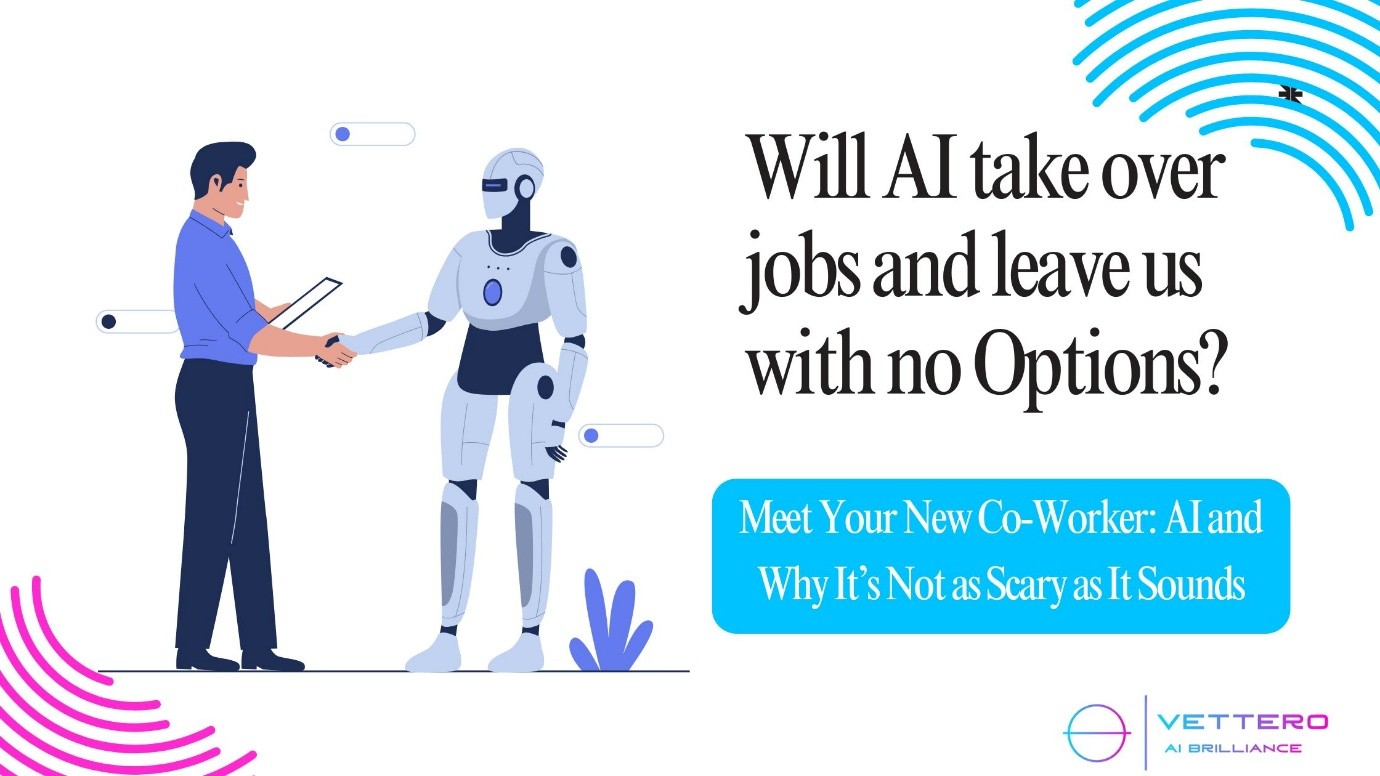
Meet Your New Co-Worker: AI and Why It’s Not as Scary as It Sounds
Let’s be real: the idea of AI in the workplace can feel a little… unsettling. I mean, we’ve all seen the movies where robots take over the world, right? So, when I first started exploring how AI could fit into our startup, I’ll admit, I had my doubts. What if it replaces jobs? What if it makes mistakes? What if it becomes too smart?
When I first started exploring AI, a part of me imagined robots replacing everyone—a machine uprising that would render humans useless. Dramatic? Maybe. But let’s be honest: we’ve all had those thoughts.
I’ve realized it’s not the villain it’s often made out to be. In fact, it’s more like a really helpful co-worker—one that doesn’t steal your lunch from the office fridge.
But I’ve learned over time: AI isn’t here to steal your job. It’s here to make it easier.
So let’s take a moment to meet your new co-worker—AI. And trust me, it’s not as scary as it sounds.
The Fear Factor: Why We Worry
AI is fast, tireless, and never takes a coffee break. So, naturally, it can feel threatening. I remember seeing an AI tool that could write content first. I was like, "Uh oh... is this going to replace me?" Spoiler alert: it didn’t. Instead, it became a collaborator. It gave me a head start, a rough draft, or a burst of inspiration when I was running on empty.
In reality, most of the fear around AI stems from misunderstanding. People imagine a fully autonomous system that pushes humans out of the picture. But today’s AI is more like a supercharged intern—one that handles the repetitive stuff so you can focus on what matters.
What AI Does in the Workplace
Let’s break down what AI is doing in businesses today:
1. Boosting Productivity
AI can automate repetitive tasks like scheduling, data entry, or document processing. I once used an AI tool to manage meeting notes. It transcribed conversations, identified action items, and even emailed summaries. It didn’t replace anyone—it just saved everyone time.
Okay, let’s address the elephant in the room: AI isn’t perfect. It makes mistakes. I’ve had moments where an AI tool gave me a completely nonsensical answer or recommendation. But here’s the thing: so do humans.
The key is to use AI as a tool, not a crutch. It’s there to support you, not replace your judgment. For example, if you’re using AI to analyze data, it’s still up to you to interpret the results and make the final decision. Think of it like a GPS: it can suggest the best route, but you’re still the one driving the car.
2. Enhancing Decision-Making
AI can analyze massive amounts of data and spot patterns faster than any human. Businesses use it to forecast sales, track customer behavior, and even monitor employee engagement. I helped a startup implement AI-based analytics to optimize their marketing budget—they ended up saving thousands.
Here’s a little secret: AI isn’t just for tech companies. It’s for everyone. Whether you’re in marketing, finance, healthcare, or even retail, there’s probably an AI tool out there that can make your job easier.
I remember the first time I used an AI-powered writing assistant. I was struggling to come up with a catchy headline for a blog post, and the tool suggested one that was perfect. It didn’t write the whole post for me—it just gave me a little nudge in the right direction. That’s the beauty of AI: it’s not about replacing your skills; it’s about enhancing them.
3. Improving Communication
From real-time language translation to AI chatbots handling basic customer queries, AI improves how businesses communicate internally and externally. I’ve worked with companies where AI chatbots handle initial customer queries, leaving the human team to focus on complex cases. It’s a win-win.
When I first started exploring AI, I assumed it was only for big companies with huge budgets. But the truth is, there are so many affordable (and even free) AI tools out there that anyone can use.
For example, there are AI tools that can help you create stunning visuals, write better emails, or even manage your social media. You don’t need to be a tech genius to use them—you just need to be willing to try something new.
4. Supporting Creativity
In today’s fast-paced world, staying competitive means staying ahead of the curve. And that’s where AI comes in. It can help you spot trends, predict customer behavior, and make smarter decisions—all in real-time.
I’ll never forget the first time we used AI to analyze customer feedback. We were able to identify patterns and insights that we would have missed otherwise. It was like having a crystal ball (but without the cheesy fortune-teller vibes). For businesses, this kind of insight is priceless.
Believe it or not, AI can be a creative ally. I’ve used AI to brainstorm blog post titles (like this one), generate social media captions, and even test different ad copy. It doesn't take over the creative process—it just speeds up ideation.
AI Isn’t Here to Replace You—It’s Here to Empower You
One of the biggest fears about AI is that it’s going to take over jobs. I used to worry about this too. But the truth is, AI is better at handling repetitive, time-consuming tasks than it is at replacing human creativity and problem-solving.
For example, at our startup, we use AI to automate things like data entry and scheduling. It’s not glamorous work, but it frees up our team to focus on the stuff that matters—like brainstorming new ideas and building relationships with clients. It’s like having an extra pair of hands (or an efficient intern).
Think of AI as a co-worker who loves spreadsheets, doesn't mind working late, and enjoys repetitive tasks. It’s not gunning for your role as a strategist, creator, or people-person. AI lacks emotional intelligence, empathy, and the ability to think outside the box—skills that humans bring to the table every day.
When I talk to business leaders, I always suggest reframing the mindset. Instead of "Will AI take my job?" ask "How can AI make my job better?"
A Personal Story: The Burnout Cure
A few years ago, I was juggling content creation, client communication, analytics, and social media—all on my own. Burnout was knocking at my door. Then I started integrating AI tools into my workflow. Scheduling? Automated. Analytics? AI-generated dashboards. Social captions? AI drafts, human-edited.
It felt like I had finally hired an assistant—one that didn’t drain my budget. AI didn’t replace me. It rescued me.
How to Welcome AI into Your Team
You don’t need to overhaul your entire business overnight. Start small:
- Use AI for scheduling or email sorting
- Try AI-powered writing assistants
- Implement chatbots for basic customer service
- Explore AI-driven analytics dashboards
The key is to experiment, observe the impact, and scale up from there.
Wrapping Up: Embrace the Collaboration
AI isn’t something to fear—it’s something to embrace. It’s not here to replace us; it’s here to help us work smarter, not harder. And while it’s not perfect, it’s constantly improving, which means the possibilities are endless.
So, the next time you hear someone talking about AI in the workplace, don’t panic. Instead, think of it as your new co-worker—one who’s always on time, never complains, and is ready to help you tackle whatever comes your way.
AI is no longer science fiction—it’s a teammate. One that works tirelessly behind the scenes to make you shine.
So the next time someone says, "AI is taking over the workplace," you can smile and reply, "Actually, it's helping me do my best work."
Because at the end of the day, the most powerful teams are made of humans and machines, working in harmony.
What about you? Got questions about working with AI? Have you had any experiences with AI in the workplace? I’d love to hear your thoughts—whether they’re positive, negative, or somewhere in between. Let’s keep the conversation going!
Drop them in the comments. Let’s make AI a little less scary, together.